Kidney Stone Helpline "Clear All Your Doubts About Kidney Stone"
Pain.
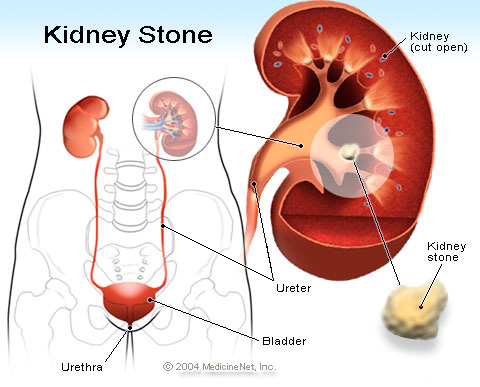
It's called renal colic - one of the most intense of all pains - and it's caused by pressure on the kidney due to blocked urine flow. The pain often radiates along the path of the urinary tract, beginning high in the back over the kidney and travelling to the lower abdomen, groin and even into the genitals. The pain begins suddenly and quickly becomes unbearable. Renal colic is often accompanied by nausea and vomiting not because the stomach is involved, but simply because of the severe pain.
Bleeding
In about 90 per cent of all cases, kidney stones cause bleeding into the urine.
CULPRITS APLENTY
About 80 per cent of the time, the principal mineral in a kidney stone is calcium, usually combined with oxalate (60 percent of all stones) but sometimes paired with phosphate (20 percent) or other substances like uric acid.